Richat Structure / Eye of the Sahara
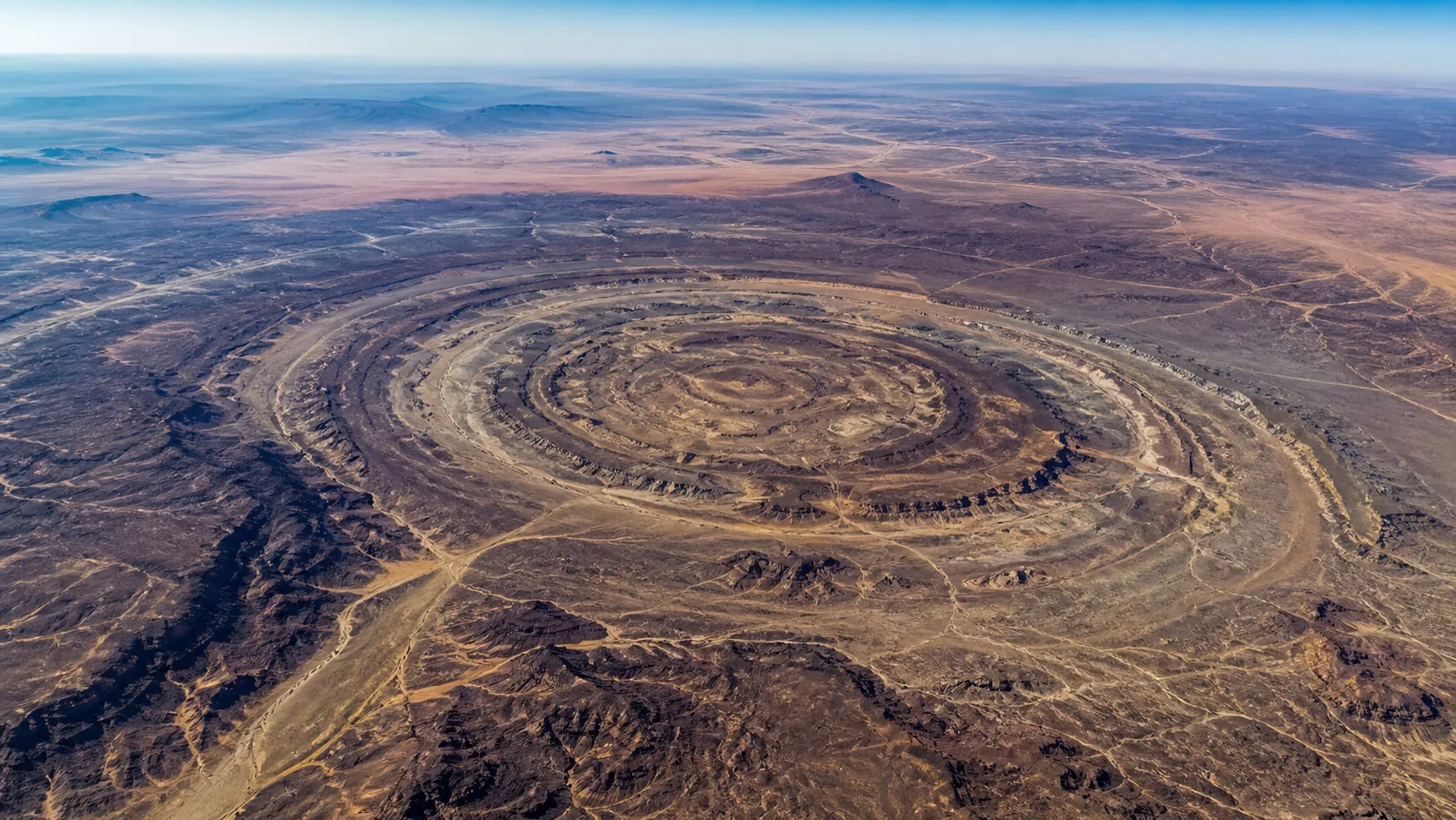
A vast bullseye of concentric rock rings some 40 kilometres wide in the Adrar desert, visible from space and known worldwide as the Eye of the Sahara.
Information can change. Always confirm locally. Read our travel disclaimer.
The Richat Structure is one of the most striking geological formations on Earth: a series of concentric rock rings carved into the Adrar plateau, so symmetrical that it was first noticed by astronauts and satellite imagery before it became a fixture on the ground for geologists and travellers. Once thought to be an impact crater, it is now generally understood as an uplifted dome that has been sculpted by millions of years of erosion, exposing layers of differently coloured and textured rock. On the ground, the scale of the structure is hard to grasp; there is no single vantage point that reveals the full circle, and most visitors experience it as a sequence of ridges, plains and rocky outcrops rather than the tidy target shape seen from above. The reward is in the geology itself and the emptiness around it: fossils, mineral veins and wind-carved rock reward a slow pace, and the surrounding desert is largely uninhabited but for scattered nomadic camps and small settlements. There are no facilities within the structure itself, and distances between water, fuel and help are considerable, so this is a destination for travellers who have arranged proper vehicles, supplies and local guidance rather than an casual detour.
Conditions, access and local arrangements change. Confirm current details before you travel.
- Concentric rock rings spanning tens of kilometres
- Layered geology exposed by deep erosion
- Silent desert plains around the formation
- Ground-level views distinct from famous aerial shots
Planning this visit
Reaching Richat requires a 4x4 and an experienced local driver or guide, usually approached from Atar or Chinguetti. Allow at least a full day for the round trip, more if combined with other Adrar sites. Cooler months are far more comfortable than the height of summer; carry ample water, fuel and communication equipment.
Visiting responsibly
Stay on existing tracks to limit damage to fragile desert surfaces, take fossils and rocks only in photographs, and ask before photographing any nomadic families encountered. Hiring local guides and drivers channels income directly to Adrar communities.
Local tips
Study a satellite view before leaving so the ground features make sense, but let the guide choose the approach. Light and haze strongly affect visibility. Keep expectations realistic: the full circular form is not visible from every ground viewpoint.
Safety notes
This is a remote desert objective with limited immediate assistance. Travel with experienced local support, adequate water, fuel, navigation and recovery equipment, and a shared route plan. Do not rely on a mobile signal or on satellite imagery alone for safe ground access.
Photos & videos
Visuals for Richat Structure / Eye of the Sahara will appear here once curated.
Things to do here
Curated activities for Richat Structure / Eye of the Sahara will appear here.
Local support available
Tell us what you need and we'll match you with trusted local support.
Related routes
We're building route data including Richat Structure / Eye of the Sahara.
Tours including this place
Request a custom itinerary tailored to your dates and interests.
Local operators covering this area
Browse the verified partner network or request matching help for Richat Structure / Eye of the Sahara.
Related videos
Videos from Richat Structure / Eye of the Sahara
Submit a video →Share your video of Richat Structure / Eye of the Sahara
Submit your Mauritania video.
Sign in to submit